
MAUSOLEUM CRYPTS
MAUSOLEUM CRYPTS in Elizabethtown, KY.
Every properly built mausoleum crypt has to solve three problems at once: ventilation, drainage, and a permanently secure closure, and industry construction standards treat all three as non-negotiable rather than optional refinements. Eternity Memorials, Inc. builds and finishes mausoleum crypts across Central Kentucky to those standards, from single chambers within an existing building to complete new construction raised on cemetery or family ground. We are licensed and insured, and we match engraved crypt fronts across an entire structure.
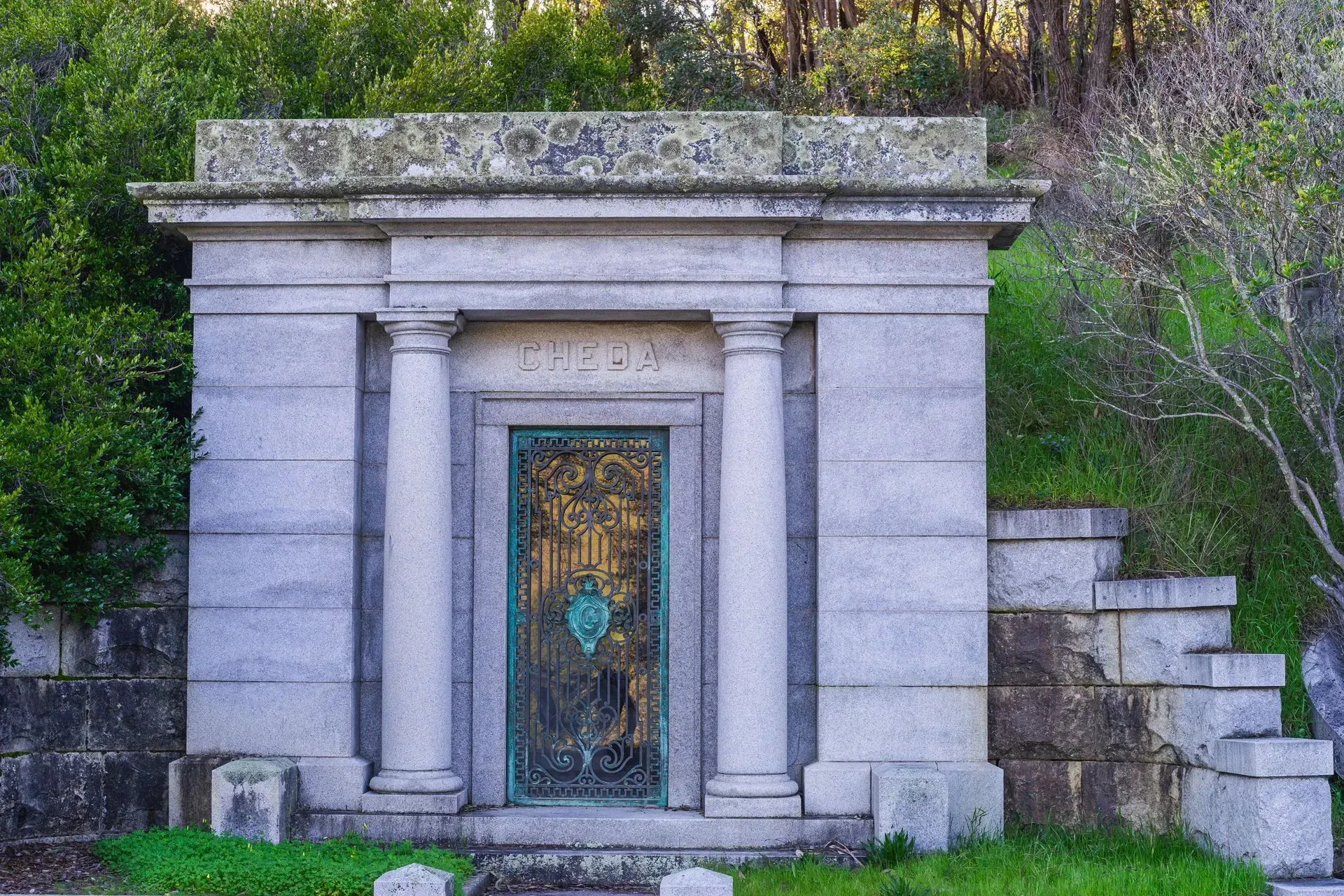
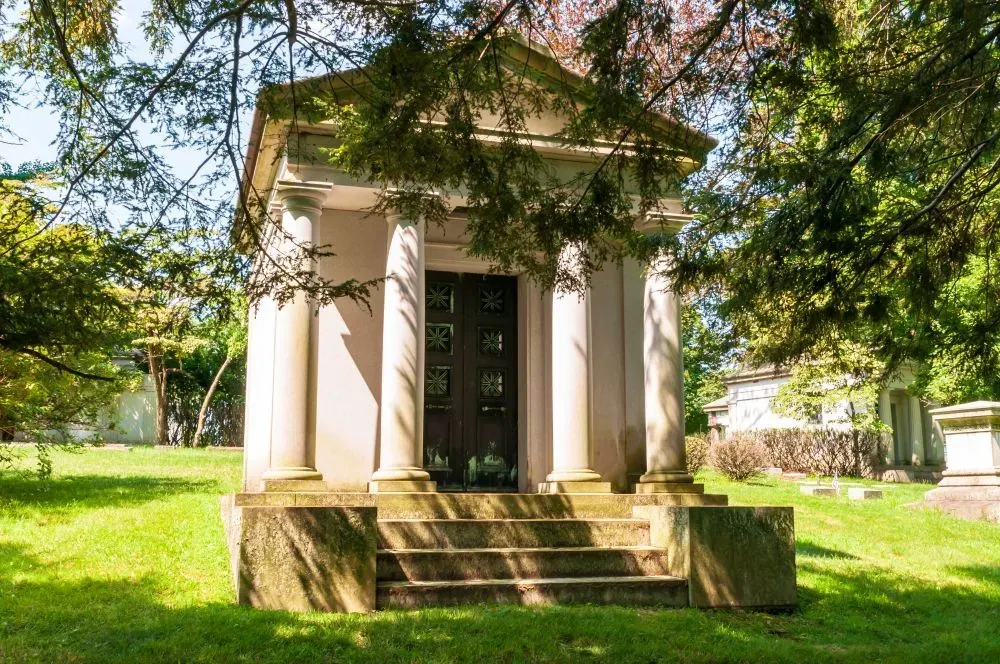
ABOVE GROUND CHANGES EVERY CALCULATION.
Ground burial hands most of the engineering to the soil. Above-ground entombment hands it back to the builder. A crypt has to carry its load, breathe correctly, shed water away from the chamber, and close in a way that stays sealed for generations without ever being reopened. None of that is visible in a finished mausoleum, which is exactly why families rarely ask about it.
We build assuming nobody will inspect the work again for a century. Ventilation paths, drainage falls, and closure detailing are settled at the drawing stage, not improvised on site.
- Ventilation and drainage designed into every chamber
- Incombustible granite, concrete, and stone construction
- Permanently secured closures with engraved fronts
- Foundations sized to the structure and the soil
Lorem ipsum dolor sit amet, consectetur adipiscing elit. Sed do eiusmod tempor incididunt ut labore et dolore magna aliqua. Ut enim ad minim veniam, quis nostrud exercitation ullamco laboris nisi ut aliquip ex ea commodo consequat.
Insert Title
MAUSOLEUM CRYPTS
SOME FAMILIES WANT SOMEWHERE THEY CAN STAND.
Ground burial asks you to visit a lawn. Entombment offers something different: a structure you can walk to in February without sinking into mud, touch, and stand beside in bad weather. For families who found graveside visits difficult, that alone decides it. Add the absence of groundwater concerns, the option of keeping several generations within one structure, and the architectural presence a mausoleum carries, and the appeal becomes easy to understand.
WET GROUND IS WHY FAMILIES ASK ABOUT THIS.
Parts of Central Kentucky hold water in ways that make families uneasy about ground interment, particularly in low-lying sections and after the wet springs this region reliably delivers. Above-ground entombment removes that concern completely. It also removes the settling problem that forces ground memorials to wait months before a stone can be set, since a crypt is placed within a structure engineered from the outset to carry it.
ABOVE-GROUND WORK LEAVES NOWHERE TO HIDE A SHORTCUT.
A crypt that was not ventilated properly announces itself eventually, and no amount of good granite covers it. That single fact has shaped how we build for 35 years. We would rather explain to a family why the drainage detail adds time than be the shop whose name is on a structure that failed. Ask any cemetery superintendent which mausoleums give them trouble. The answer is never about the stone.
WHAT CORRECTLY BUILT ENTOMBMENT DELIVERS
VISITING IN ANY WEATHER
Rain, snow, and saturated ground stop mattering. A structure with paved approach and solid footing stays reachable on the days when a lawn section simply is not.
NO GROUNDWATER CONCERN
Above-ground placement removes the worry families most often raise about burial in low or wet sections. The chamber sits above the water table entirely, by design.
A STRUCTURE THAT HOLDS GENERATIONS
Multiple crypts within one structure keep a family physically together, and additional chambers can be planned from the start rather than negotiated with a cemetery decades later.
NO WAITING FOR SETTLEMENT
Ground graves need months to compact before a monument can be set. Entombment carries no such delay, so the memorial front is complete and engraved from day one.
ARCHITECTURAL PRESENCE
A mausoleum reads as a deliberate piece of building rather than a marker on a lawn. Proportion, material, and detail give it a permanence people respond to immediately.
A SEALED, PROTECTED SPACE
Correct closure keeps weather, pests, and interference out permanently, which is a comfort that matters to many families more than any other feature of the structure.
Insert Title
Lorem ipsum dolor sit amet, consectetur adipiscing elit. Sed do eiusmod tempor incididunt ut labore et dolore magna aliqua. Ut enim ad minim veniam, quis nostrud exercitation ullamco laboris nisi ut aliquip ex ea commodo consequat.
Insert Title
WHAT WE BUILD
OUR MAUSOLEUM CRYPT WORK.
Entombment covers a wider range of work than most families expect, from a single chamber purchased within an existing building to a complete structure raised on a family plot. These are the projects we handle most.
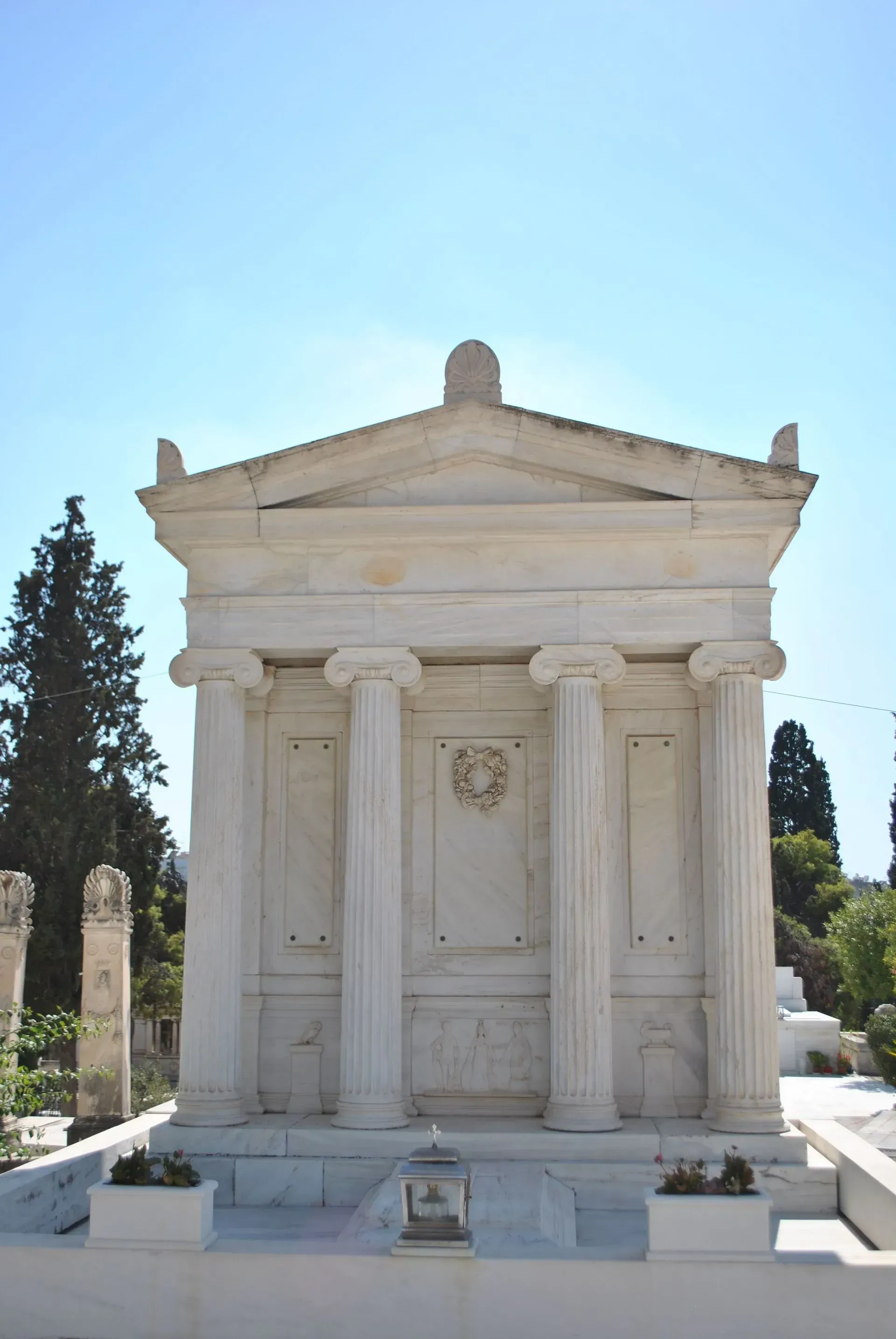
SINGLE CRYPTS
Single Crypt Construction
One chamber built for one individual, either within a larger structure or as a compact standalone unit. Ventilation, drainage, and closure detail are identical to any larger build, simply at a smaller scale.
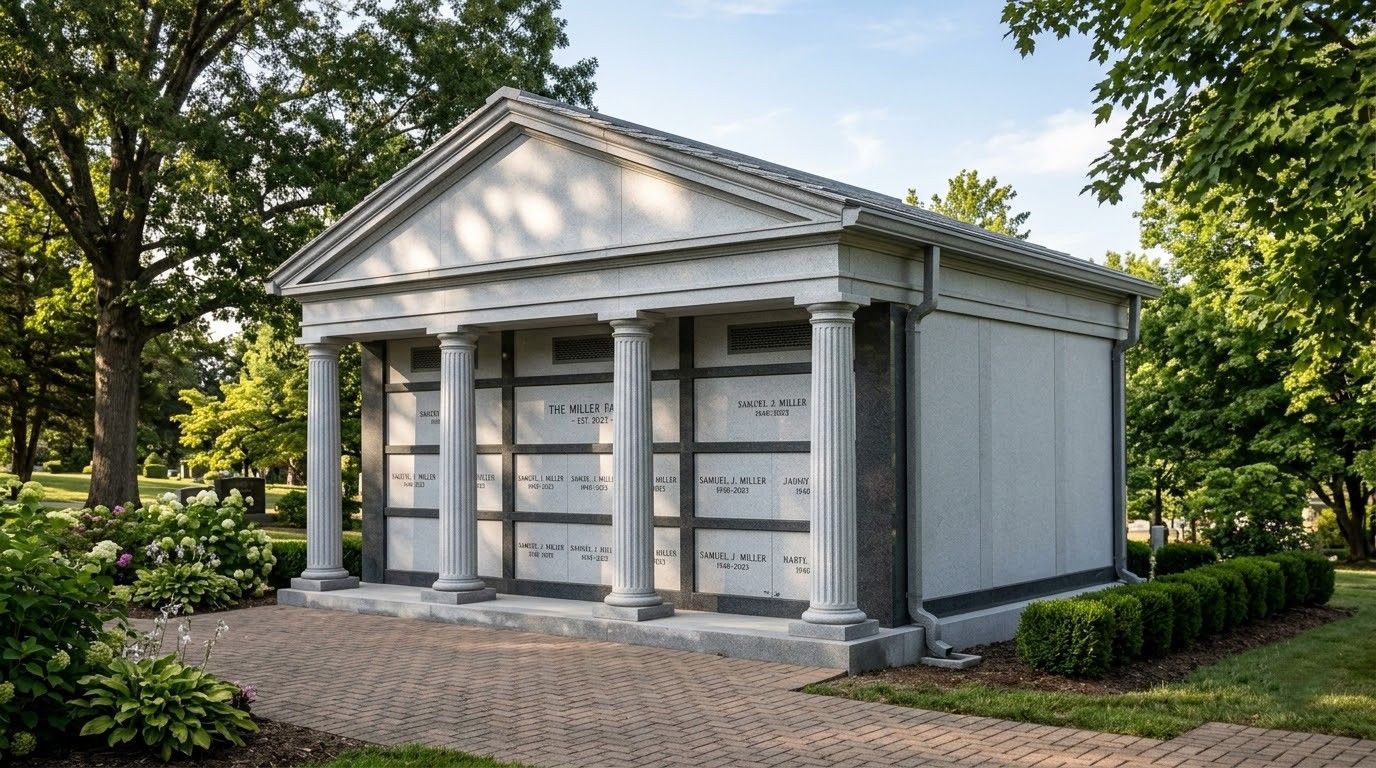
COMPANION
Companion and Side-by-Side Crypts
Two chambers arranged side by side or stacked, designed for a couple. A shared front panel or matched adjacent fronts keeps the pair reading as one memorial rather than two separate purchases.
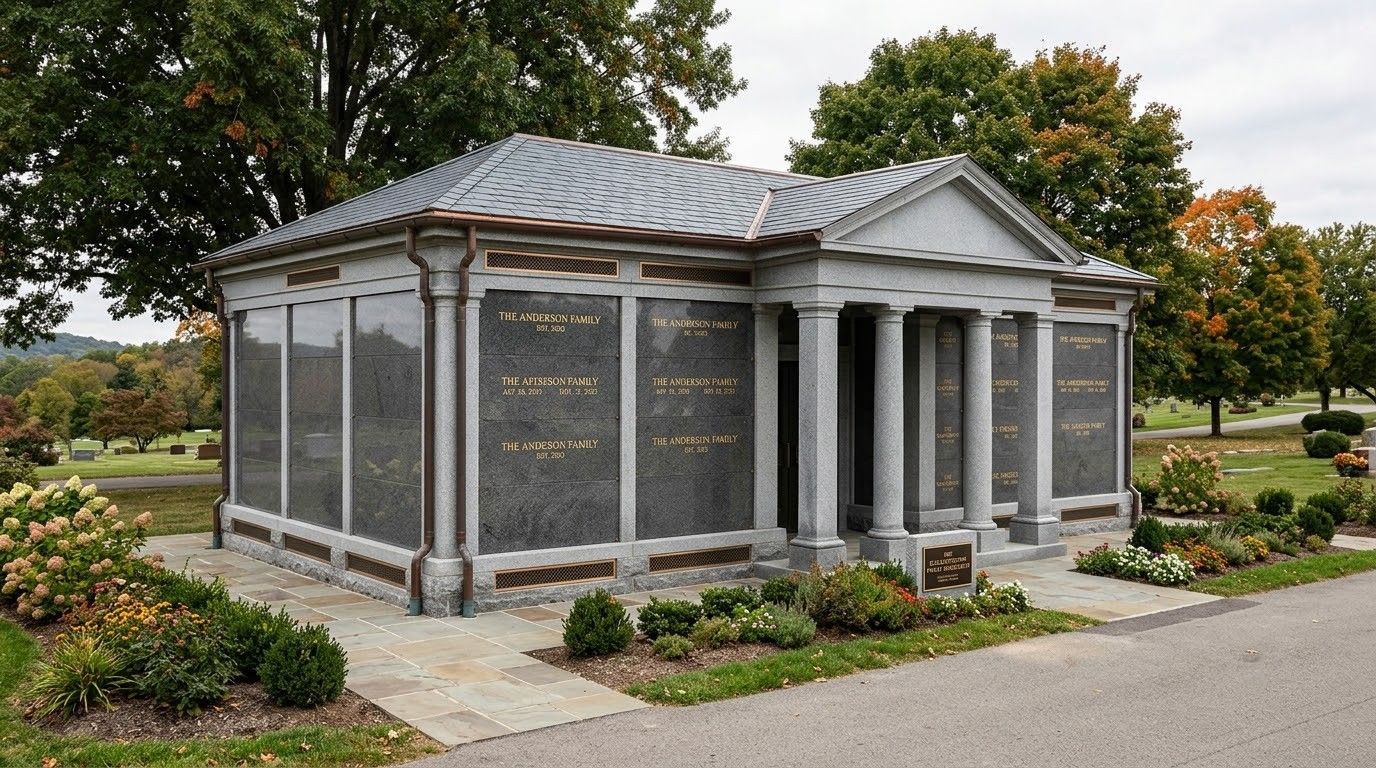
GARDEN CRYPTS
Garden and Lawn Crypt Units
Partially below-grade chambers set within a landscaped section, offering entombment at a lower profile than a full building. Popular where cemeteries restrict structure height or want a uniform section appearance.
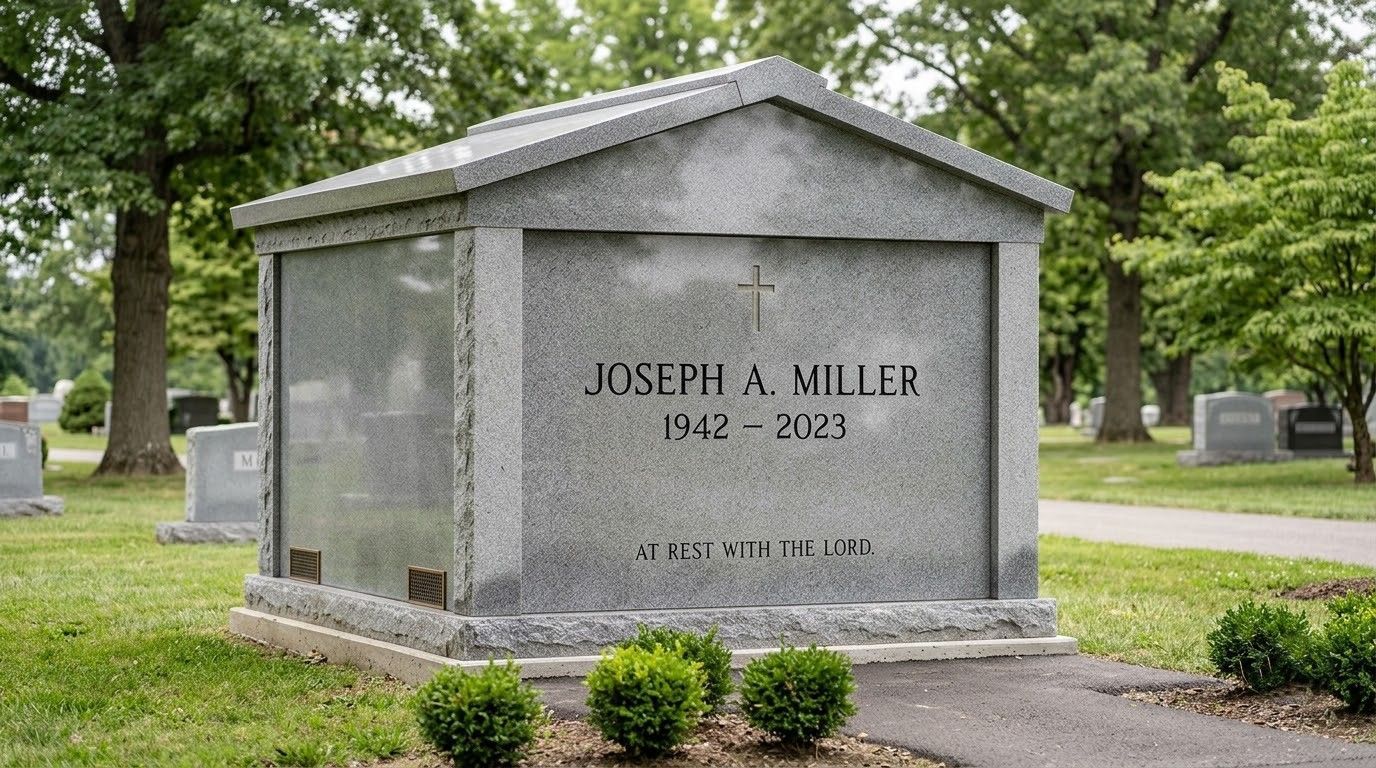
CRYPT FRONTS
Engraved Crypt Fronts and Plates
The visible granite or marble face carrying names, dates, and emblems. We match font, depth, and finish across an entire structure so fronts added decades apart still look like one continuous record.
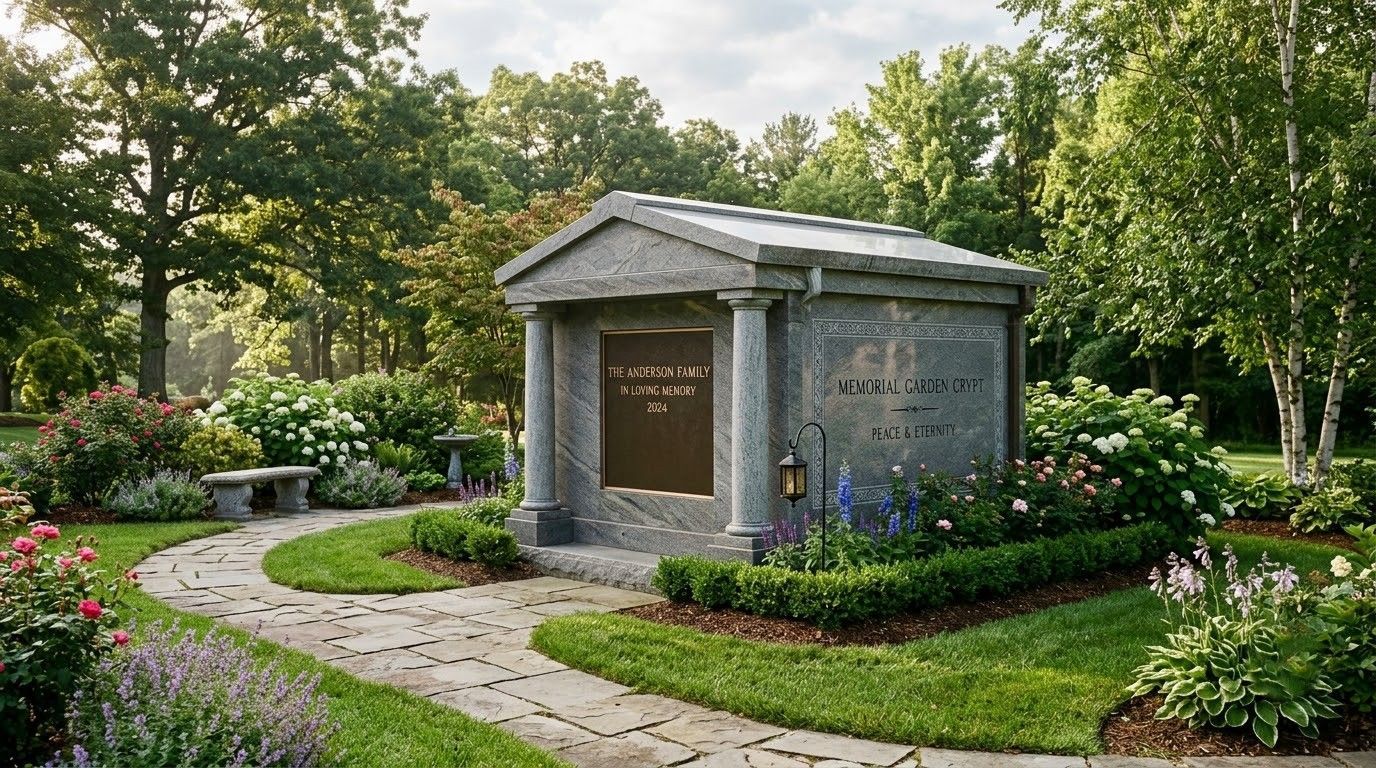
RESTORATION
Crypt Repair and Resealing
Older mausoleums develop problems at the seal, the ventilation path, or the drainage. We assess, repair, and reseal existing crypts, and replace damaged or weathered fronts with matched new material.
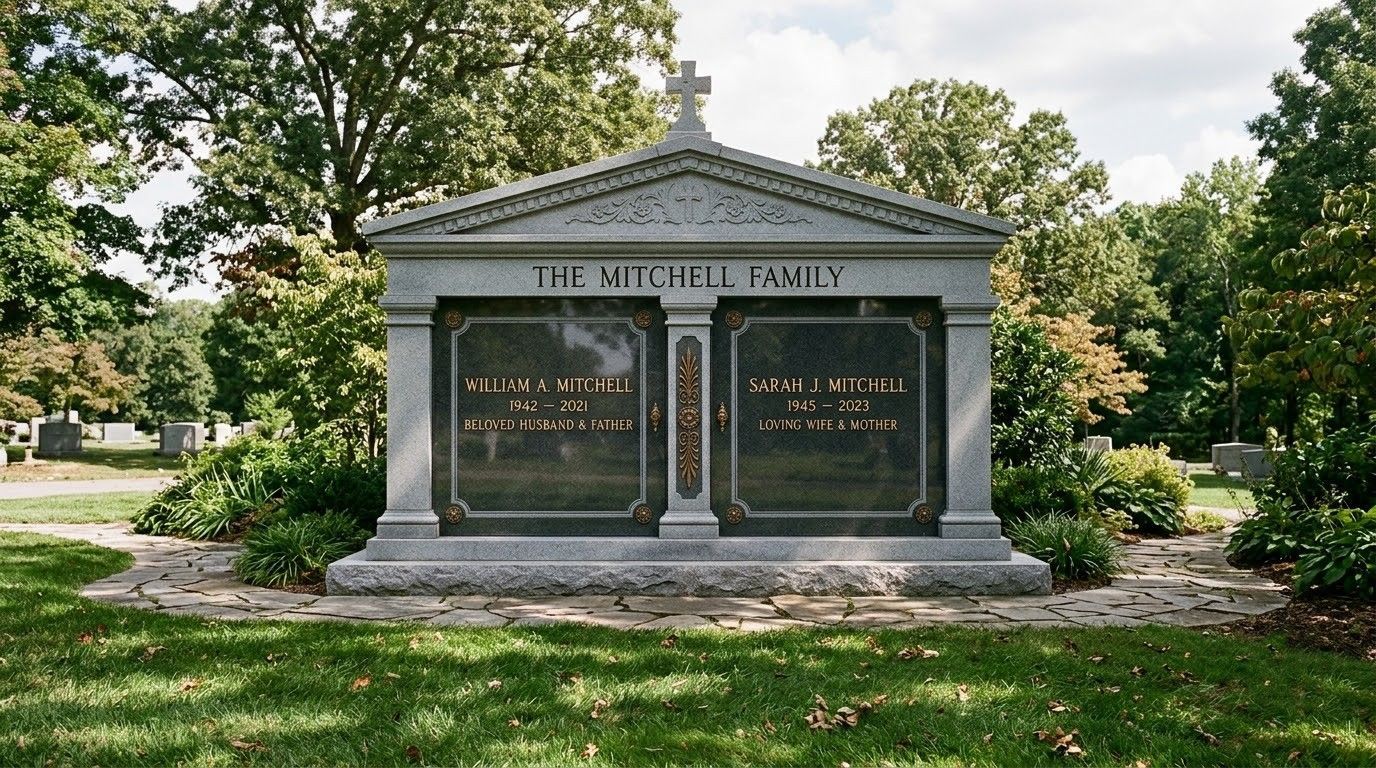
STRUCTURES
New Mausoleum Construction
Full structures raised on cemetery or family ground, with crypt counts, ventilation, drainage, foundations, and finish specified together. Design, engineering, and construction stay under one roof from first sketch to final door.
Common Questions
FREQUENTLY ASKED QUESTIONS.
Entombment raises practical questions that ground burial never does, and most families have nobody to ask. These are the ones we hear most often across the counter.
What exactly is a mausoleum crypt?
A crypt is a sealed chamber within a mausoleum built to hold a casket entirely above ground. It can sit inside a community building shared by many families, or within a private structure raised for one family alone.
How is a mausoleum crypt sealed after entombment?
The casket is placed, an inner sealing closure is fitted over the opening, and the engraved granite or marble front is then set and mechanically secured. Together they close the chamber permanently against weather, pests, and any interference.
Why does a mausoleum require ventilation?
Sealed chambers holding organic remains generate gases and moisture as decomposition proceeds over time. Designed ventilation paths carry both safely away, which is what prevents the odor and interior staining that poorly built mausoleums eventually become known for.
What is the difference between a crypt and a niche?
Scale and contents are the difference. A crypt is sized for a casket and full-body entombment, while a niche is a much smaller compartment holding an urn of cremated remains. Many structures include both within a single design.
What is a companion or side-by-side crypt?
Two chambers built for a couple, arranged either horizontally beside one another or stacked vertically as a tandem unit. The arrangement keeps spouses physically together, and it is usually presented behind matched adjacent fronts or one shared engraved panel.
How is water kept out of a mausoleum crypt?
Through sloped tops, flashing, sealed joints, drainage designed behind and beneath the chambers themselves, and careful mortar selection. Eternity Memorials, Inc. treats water management as the very first design question on every single structure built around Elizabethtown, KY.
Can a crypt front be re-engraved or replaced later?
Yes. Fronts are replaceable components, which matters when a second name is added or weathering takes its toll. Eternity Memorials, Inc. matches existing lettering specifications on structures throughout Elizabethtown, KY so later additions never read as newer than the originals.
What is the difference between community and private mausoleums?
A community mausoleum is a large structure where a cemetery sells individual crypts to unrelated families. A private mausoleum is commissioned by a single family, built on their own plot, and holds only their own chambers within it.
HOW WE WORK
FROM FIRST QUESTION TO SEALED CHAMBER, HERE IS HOW.
STEP 01
WE TALK THROUGH ENTOMBMENT
Above-ground burial is unfamiliar to most families, so we start by explaining what it involves, what it does not, and how it genuinely compares with the alternatives before any design work is even discussed.
STEP 02
WE ASSESS THE SITE OR STRUCTURE
For new construction we evaluate soil, drainage, and access directly on the ground. For work within an existing building we inspect its condition, its ventilation, and how the new crypt front must match its neighbors.
STEP 03
WE COORDINATE WITH THE CEMETERY
Cemeteries maintain specific rules covering entombment structures, materials, and placement. We obtain those requirements in writing and design within them from the start, so approval never becomes an obstacle late in the project.
STEP 04
WE DESIGN AND ENGINEER
Chamber dimensions, ventilation paths, drainage falls, foundation sizing, granite selection, and the engraved front are all specified together as one package. You review scaled drawings of the whole thing before any material is ordered.
STEP 05
WE BUILD AND FINISH
Foundations are poured and left to cure, the structure is assembled with sealed joints and correctly matched mortar, and every visible granite face is finished to the standard the approved drawings specified for it.
STEP 06
WE ENGRAVE AND CLOSE
The front is engraved to the archived specification, the chamber is closed and permanently sealed at the time of entombment, and we come back out whenever an additional name has to be added to the structure later.
START A CONSULTATION
ASK US THE QUESTIONS NOBODY ELSE EXPLAINS.
Entombment is worth understanding properly before choosing it, and there is no obligation in asking. Bring your questions about ventilation, sealing, long-term upkeep, or cemetery rules. Reach out through our contact page to arrange a conversation.
WHAT YOUR CONSULTATION COVERS:
- A plain explanation of how entombment actually works
- Ventilation, drainage, and sealing detail explained clearly
- Cemetery entombment rules obtained and reviewed
- Single, companion, and family crypt options compared
- Granite, marble, and finish samples viewed in person
- Scaled drawings before any material is committed