
BRICK & STONE MASONRY
BRICK & STONE MASONRY in Elizabethtown, KY.
Mortar strength is a matching exercise, not a maximizing one: Type N reaches roughly 750 psi at 28 days while Type S reaches 1,800 psi, and using the harder one on soft historic brick drives stress and moisture into the units instead of the joints. Eternity Memorials, Inc. builds and repairs brick and stone masonry across Central Kentucky with mortar matched carefully to the wall it is going into, alongside the flashing and drainage that keep it dry. Licensed and insured.
MASONRY FAILS AT THE JOINTS, NOT THE STONE.
Walk any old wall in Hardin County and the brick will usually be sound while the mortar is crumbling, cracked, or patched with something far too hard. That is the whole story of masonry maintenance. Joints are the sacrificial element in any wall, designed to weather and to be replaced periodically, and treating them as permanent is precisely how a repairable wall becomes a full rebuild.
We assess joints, units, flashing, and drainage before quoting any masonry work. Sometimes the honest answer is repointing rather than replacement, and we would rather say so.
- Mortar matched to unit strength, age, and exposure
- Repointing that removes joints properly, not skim coats
- Flashing and weep holes installed where water needs out
- New stone matched to existing color, texture, and coursing
Lorem ipsum dolor sit amet, consectetur adipiscing elit. Sed do eiusmod tempor incididunt ut labore et dolore magna aliqua. Ut enim ad minim veniam, quis nostrud exercitation ullamco laboris nisi ut aliquip ex ea commodo consequat.
Insert Title
BRICK & STONE MASONRY
STONE IS THE ONLY MATERIAL THAT IMPROVES BY STAYING PUT.
Cladding fades, decking grays, and painted surfaces need attention on a schedule. Masonry does the opposite: it settles into a property, weathers into character, and asks for almost nothing provided the water is managed. We came to this work through memorials, where a hundred years is the ordinary expectation, and we have never seen a reason to hold a garden wall or a storefront facade to a shorter one.
WATER MANAGEMENT IS THE WHOLE JOB HERE.
Wet springs, humid summers, and freeze-thaw winters mean every masonry assembly here is really a water-management assembly. Water that gets behind a veneer needs a path back out, which is what flashing and weep holes provide, and any wall built without them pushes moisture through its face instead. It is the same problem we solve on a mausoleum, at a different scale.
MORTAR TEACHES YOU PATIENCE OR IT TEACHES YOU NOTHING.
Every mistake this trade offers involves rushing: mixing too rich, pointing in the wrong weather, laying too fast for the mortar to take up, or repointing over joints that were never properly raked out. Over 35 years we have made enough of those errors early on to have stopped making them now, and a joint tooled at the right moment behaves differently for 50 years. Has anyone looked closely at what is holding your wall together lately?
WHAT CAREFUL MASONRY WORK DELIVERS
A WALL THAT STAYS DRY
Correct flashing, weep holes, and drainage keep water moving out rather than into the assembly. Nearly every masonry failure traces back to that one issue.
REPAIRS THAT DISAPPEAR
Matched units, matched mortar color, and matched joint profile mean a repaired section stops being visible. The patch that announces itself is the one that used whatever was available.
PRESERVED HISTORIC UNITS
Softer, vapor-permeable mortar protects old brick instead of quietly destroying it. Using modern high-strength mixes on antique masonry causes exactly the spalling everyone blames on age.
STRUCTURE YOU CAN RELY ON
Properly bedded units, correct bond patterns, and adequate footings mean a wall carries what it was built to carry without leaning, bowing, or cracking underneath.
CHARACTER THAT AGES WELL
Natural stone and brick genuinely gain appeal over decades. Few materials available today can honestly claim that, and none of the manufactured alternatives get anywhere close.
ONE TRADE, START TO FINISH
Footings, drainage, laying, pointing, and the final cleanup all handled by the same crew means nobody is blaming another trade when something needs sorting out.
Insert Title
Lorem ipsum dolor sit amet, consectetur adipiscing elit. Sed do eiusmod tempor incididunt ut labore et dolore magna aliqua. Ut enim ad minim veniam, quis nostrud exercitation ullamco laboris nisi ut aliquip ex ea commodo consequat.
Insert Title
WHAT WE BUILD
OUR BRICK AND STONE MASONRY WORK.
Our masonry runs from cemetery and memorial stonework to structural and decorative work on homes and commercial buildings. All of it takes the same knowledge of units, mortar, and water. Here is what we most often take on.
WALLS
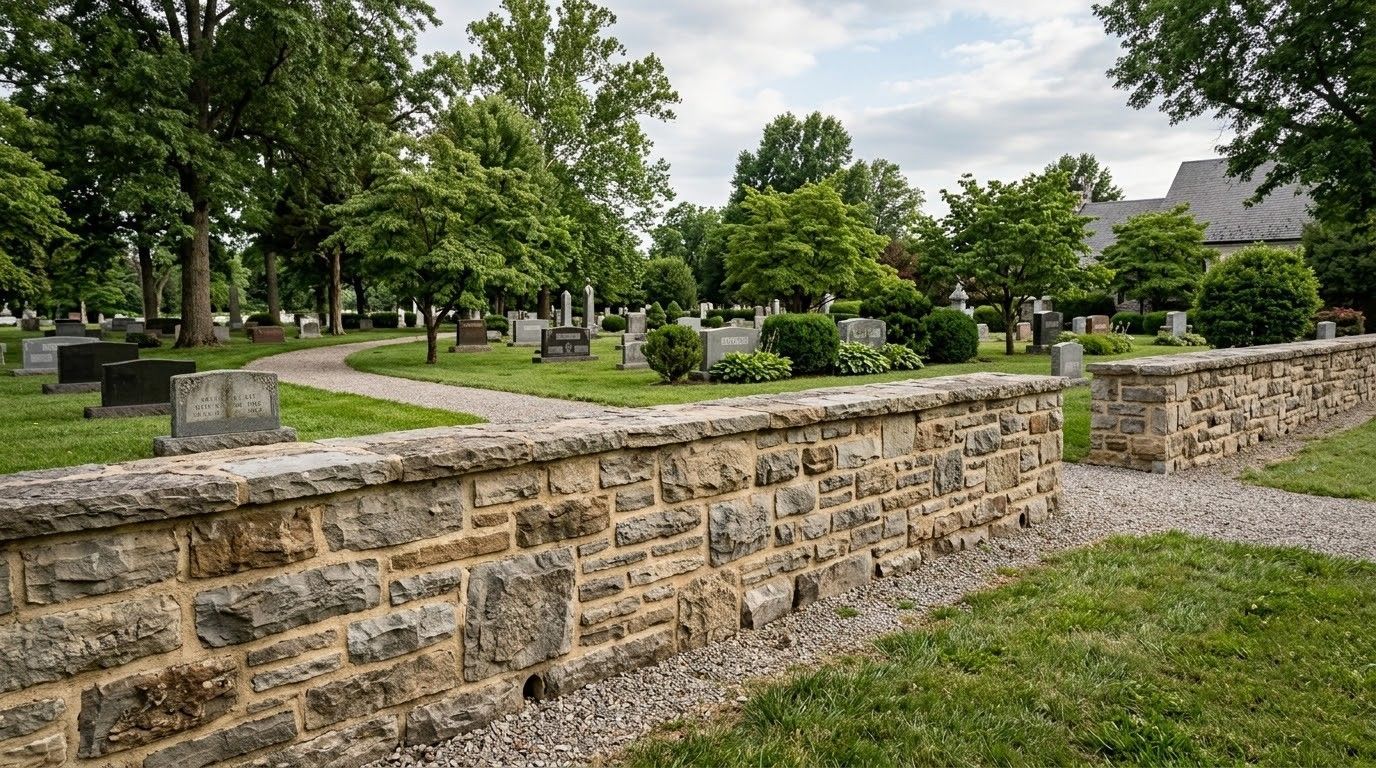
Retaining and Freestanding Walls
Structural stone and block retaining walls with proper drainage behind them, plus freestanding garden and boundary walls. Height, backfill, and water pressure determine the build long before appearance enters the conversation.
VENEER
Brick and Stone Veneer
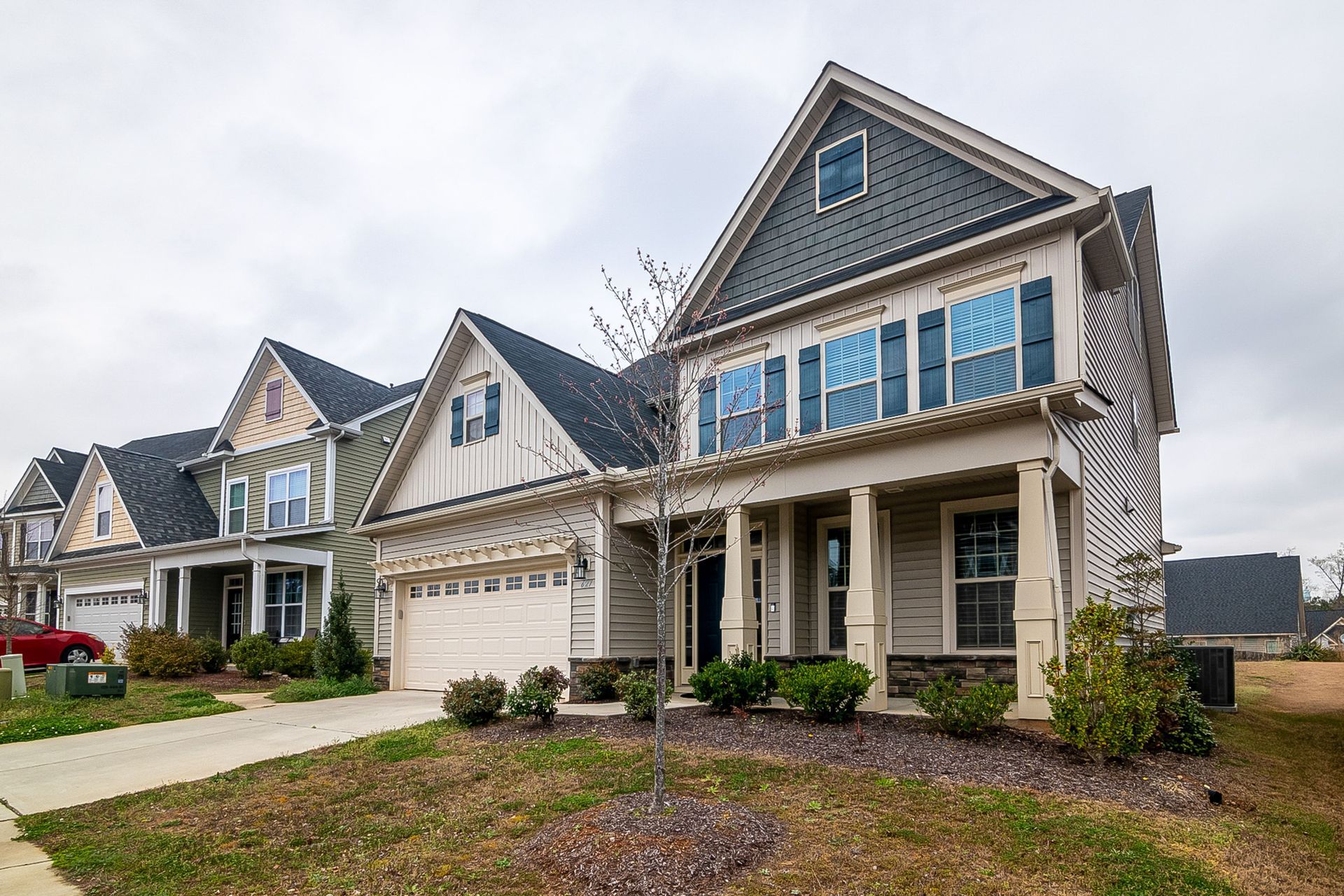
Full-depth and adhered veneer on residential and commercial elevations, detailed with the flashing, weep holes, and wall ties that keep the structure behind the facing dry through Kentucky's long wet seasons.
COLUMNS
Columns, Piers, and Steps
Driveway columns, porch piers, stone steps, and landings. These take constant physical contact and weather, so footing depth and unit selection matter far more than they do on a decorative wall.
REPOINTING
Repointing and Joint Repair
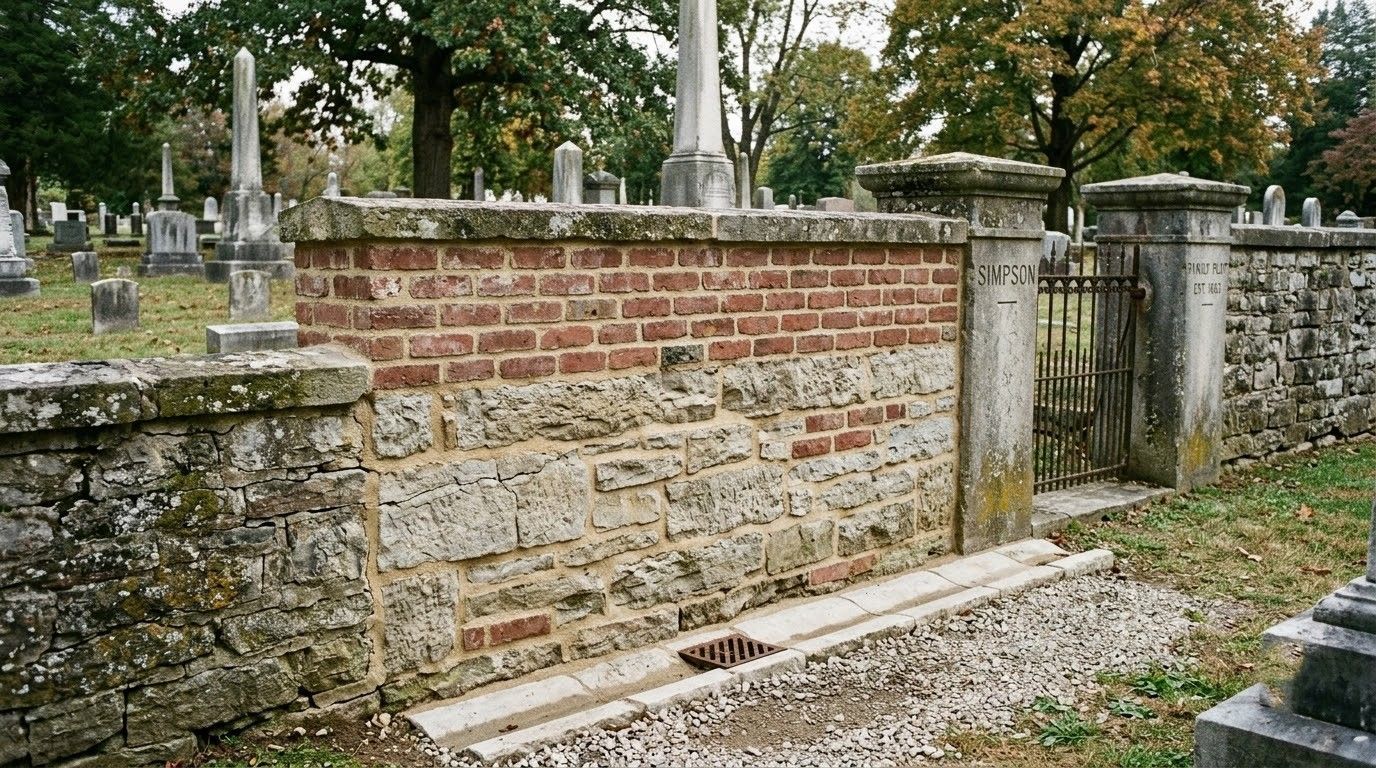
Old mortar cut back to sound depth, not skimmed over, then repointed with a mix matched to the original in strength, color, and texture. This is the single most valuable repair most old masonry can receive.
REPAIRS
Structural Masonry Repair
Stair-step cracking, bowing, spalled units, and failed lintels. We look for the cause first, since rebuilding a section without addressing what moved simply reproduces the same crack a few years later.
MEMORIAL
Cemetery and Memorial Masonry
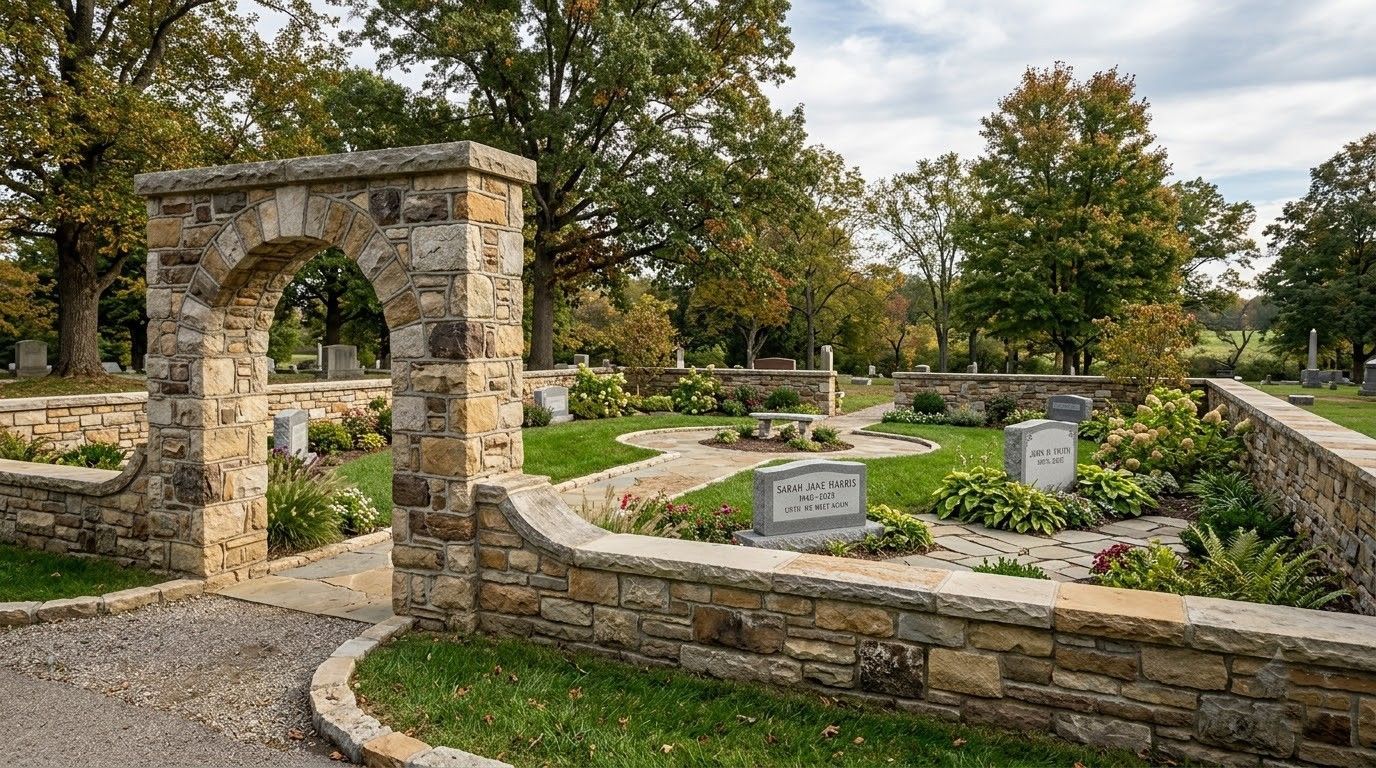
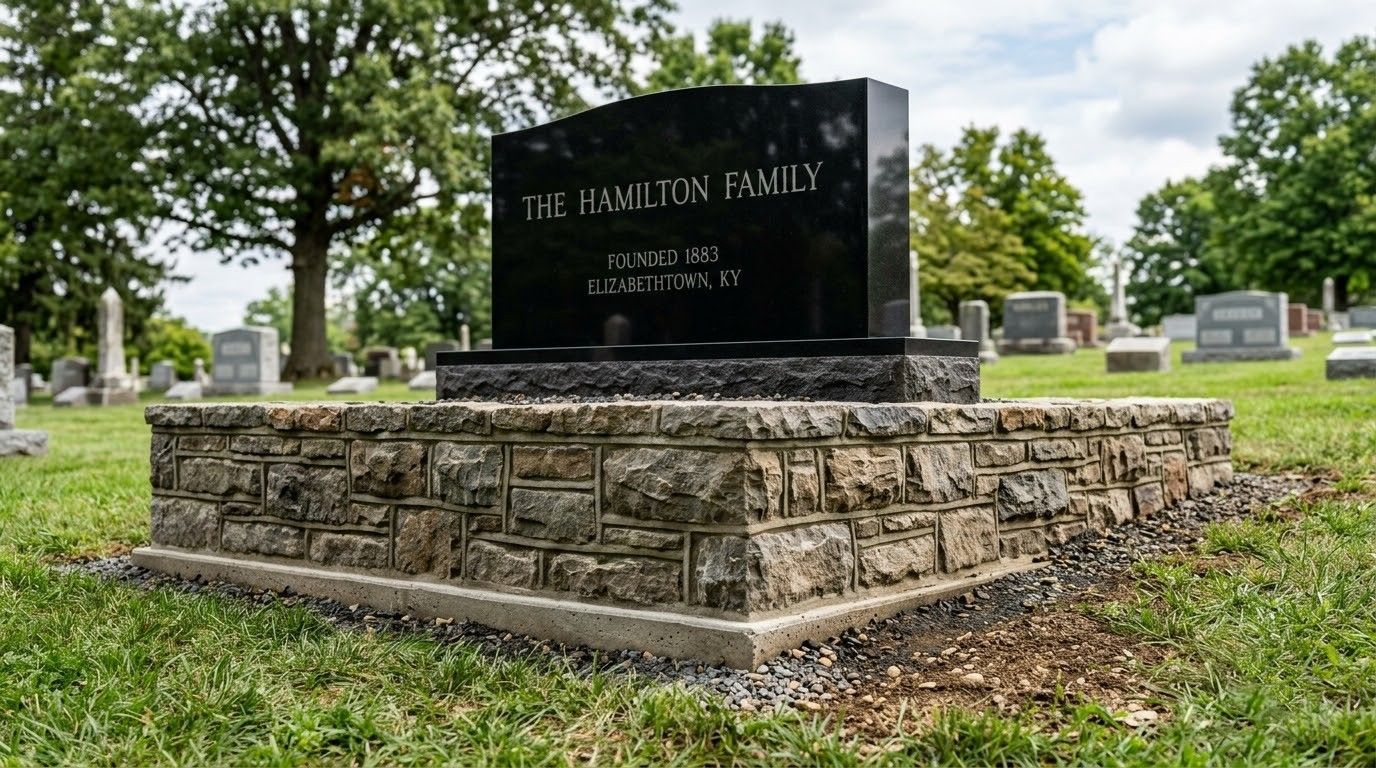
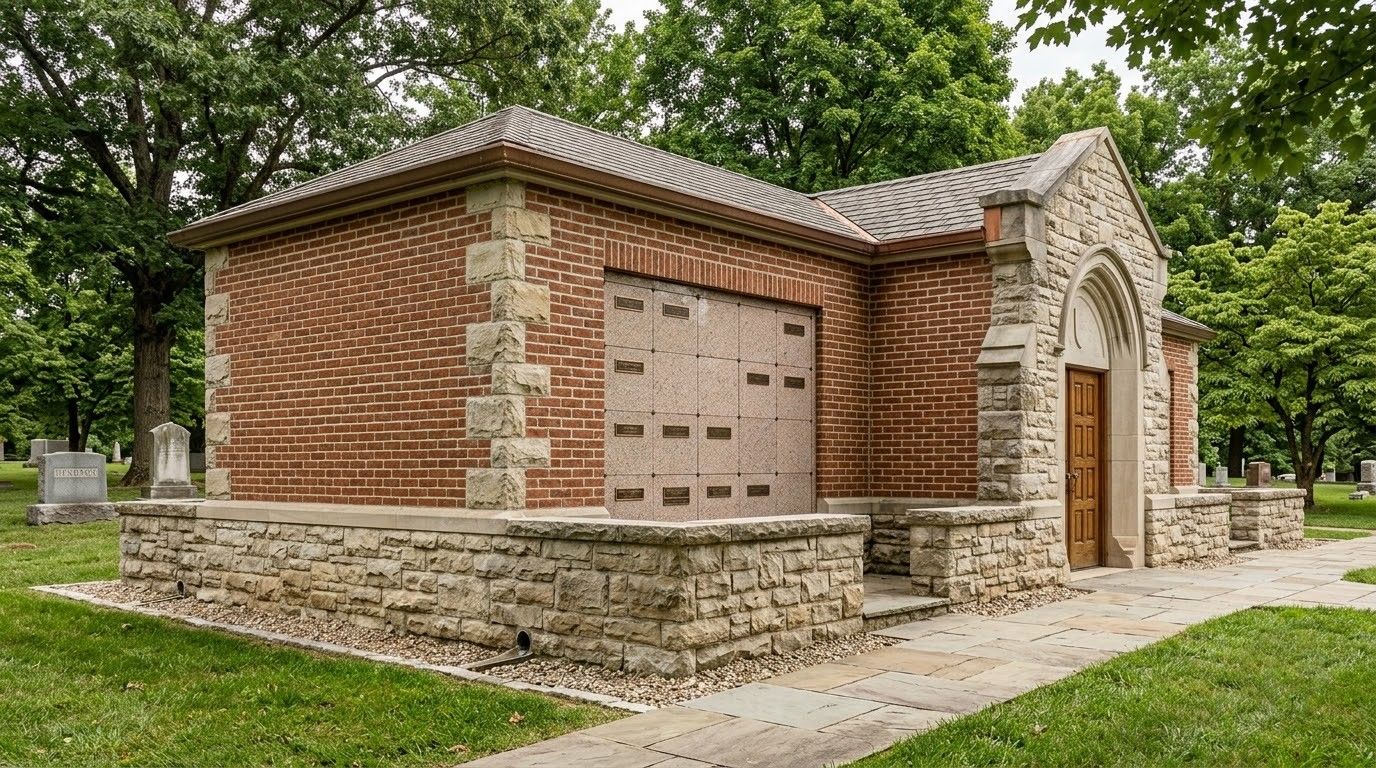
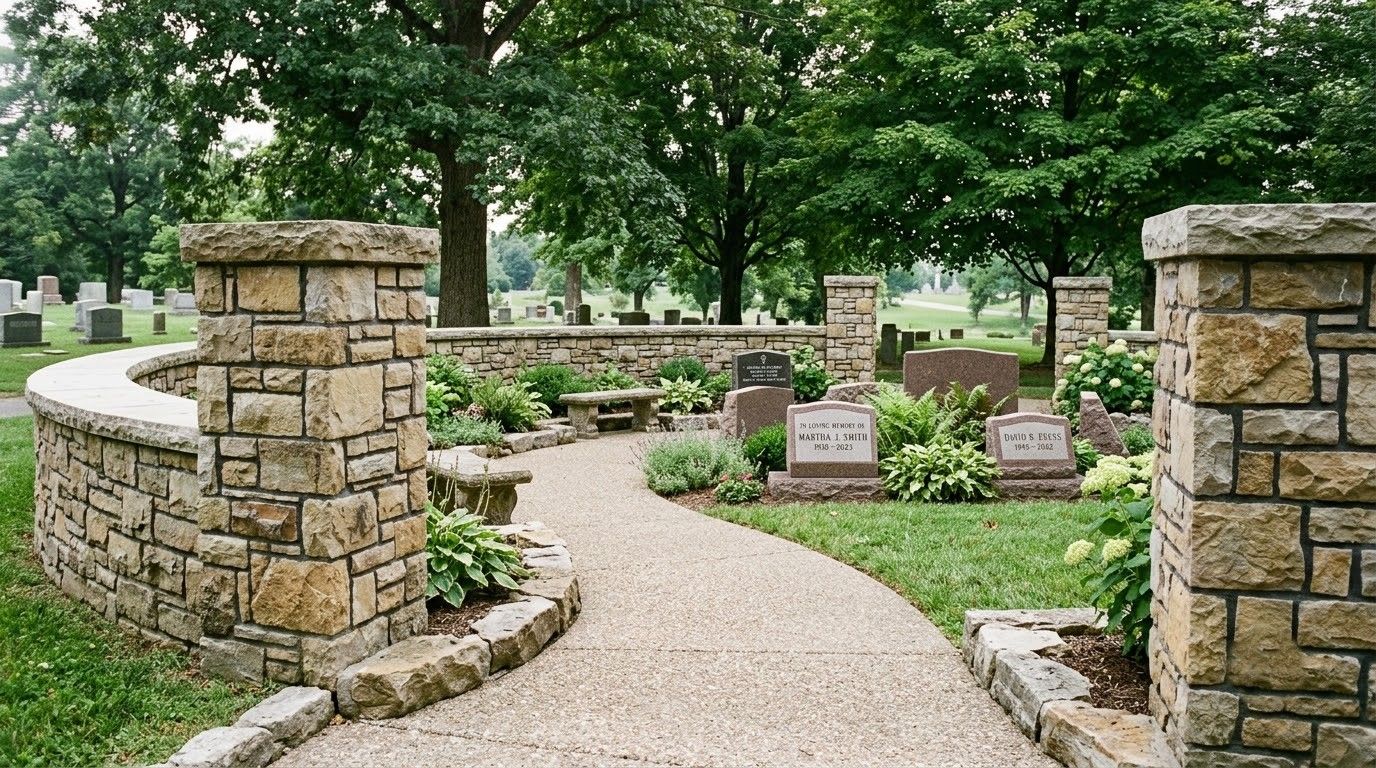
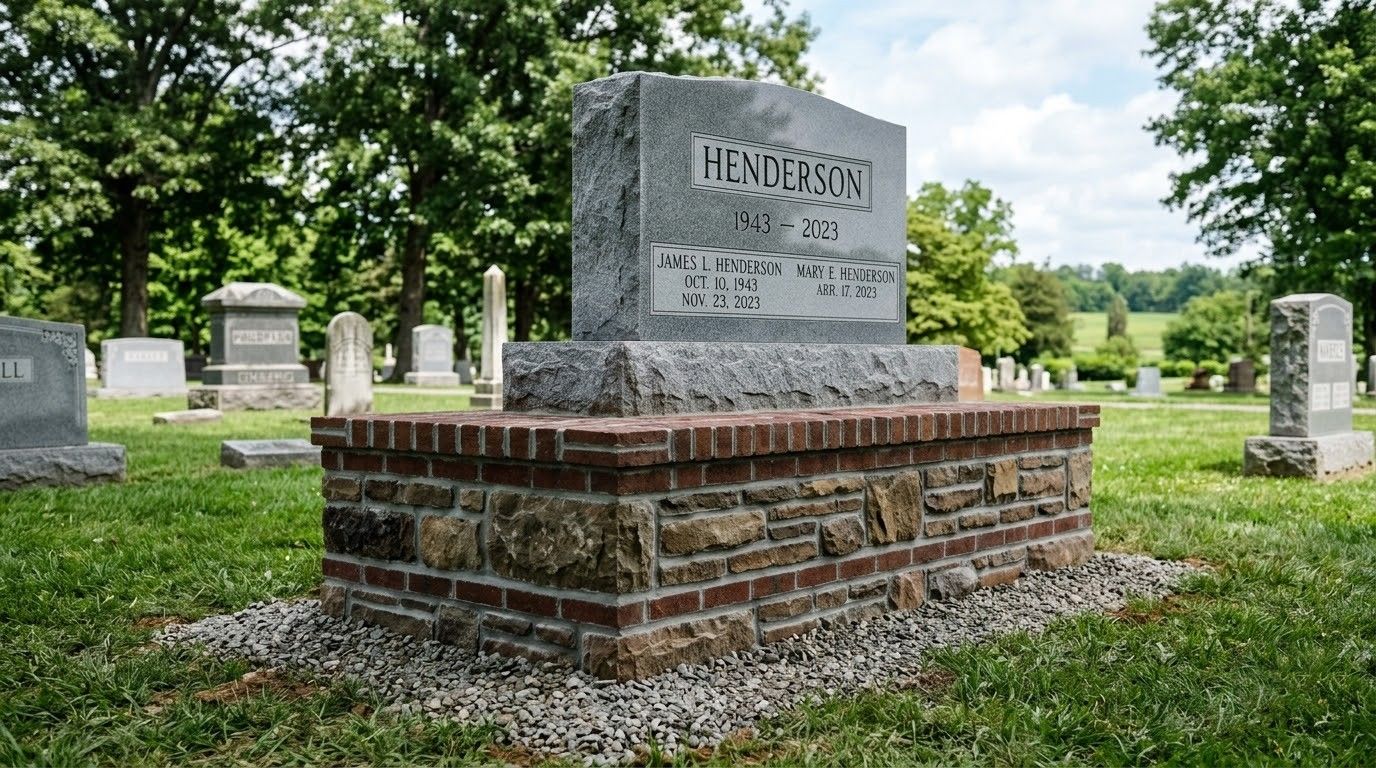
Cemetery boundary walls, columbarium and mausoleum bases, monument foundations, and the stonework that frames a memorial garden. This is where our masonry crew and our monument shop are doing the same job.
Common Questions
FREQUENTLY ASKED QUESTIONS.
Masonry questions usually arrive after somebody notices a crack, a stain, or crumbling joints. These are the ones we field most often from homeowners and property managers alike.
What is the difference between full-depth stone and stone veneer?
Full-depth stone is a thick, structural unit laid as part of the wall itself. Veneer is a thinner facing anchored back to a structural wall, carrying no load of its own. Both still need flashing and proper drainage detailing behind them.
What is repointing and when does masonry need it?
Repointing means cutting out the deteriorated mortar to a sound depth and replacing it with fresh mortar. It becomes necessary once joints are visibly receding, crumbling under a key, or letting water through into the wall behind them.
What mortar type suits brick veneer?
Type N, at roughly 750 psi, suits most above-grade veneer work where the wall system calls for it. Type S is considerably stronger at around 1,800 psi, but strength alone never determines the right choice for any given wall.
Why does using hard mortar damage older brick?
Historic brick is softer than modern units and needs joints softer than itself. A high-strength mortar refuses to yield, so seasonal movement and trapped moisture stress the brick faces instead, causing exactly the spalling and flaking you can see.
What are weep holes and why do masonry walls need them?
Weep holes are deliberate openings at the base of a veneer that let water which has penetrated the wall drain back out. Without them, moisture simply accumulates behind the masonry and eventually pushes its way through the visible face.
What causes stair-step cracking in a brick wall?
Stair-step cracks follow the mortar joints and almost always indicate differential movement below, from settlement, poor drainage, or an inadequate footing. Repairing only the crack without addressing whatever moved underneath guarantees that it reappears within a few seasons.
How long does new masonry need before it is loaded?
Mortar gains most of its strength over 28 days, with the early cure being especially critical during the first few days. Eternity Memorials, Inc. schedules masonry work around Elizabethtown, KY carefully to avoid pointing in freezing or extreme conditions.
Can new stone be matched to existing masonry?
Usually, though it takes real effort. Unit size, color range, texture, coursing, and joint profile all have to match, and Eternity Memorials, Inc. blends new material across a repair area on projects throughout Elizabethtown, KY so the transition reads as gradual.
HOW WE WORK
FROM FIRST CRACK TO FINISHED JOINT, HERE IS HOW.
STEP 01
WE LOOK FOR THE CAUSE
Before any quote, we work out why the masonry is doing what it is doing. Drainage, footings, flashing, and any past repairs all get examined closely, because treating a symptom alone wastes your money entirely.
STEP 02
WE MATCH THE MATERIALS
Existing units and mortar are assessed for strength, color, and texture. Samples are prepared and compared against the wall in daylight, since mortar color shifts considerably between the mixing board and a cured joint.
STEP 03
WE SCOPE AND EXPLAIN
You get a plain description of what needs doing now, what can safely wait, and what would simply be wasted money. Masonry work is expensive enough that guessing at scope helps nobody involved.
STEP 04
WE PREPARE PROPERLY
Joints are cut back to sound depth, surfaces are cleaned, footings are excavated where required, and drainage and flashing are installed. Preparation is most of this trade and almost none of the photographs.
STEP 05
WE LAY AND POINT
Units are set with full bedding and consistent joints, then pointed and tooled to match the surrounding profile exactly. Work is paced to the mortar and the weather rather than to a schedule.
STEP 06
WE CLEAN AND PROTECT
Faces are cleaned using the gentlest method that works, protective covering is used while the mortar cures, and the site is left clear. Aggressive acid washing damages the units themselves, so we avoid it entirely.
START A CONSULTATION
HAVE SOMEONE LOOK BEFORE THE WALL DECIDES FOR YOU.
Cracks, stains, and crumbling joints rarely improve on their own, and the early repair is always the smaller one. We will come out, look properly, and tell you plainly what is happening. Reach out through our contact page.
WHAT YOUR CONSULTATION COVERS:
- An on-site assessment of units, joints, and drainage
- An honest diagnosis of what is actually causing it
- Mortar and unit matching samples prepared for comparison
- A clear scope separating urgent work from optional
- Guidance on flashing, weep holes, and water management
- A realistic schedule that respects curing weather